


 English
 عربى
عربى 中文简体
中文简体
Galvanized Appliance Components
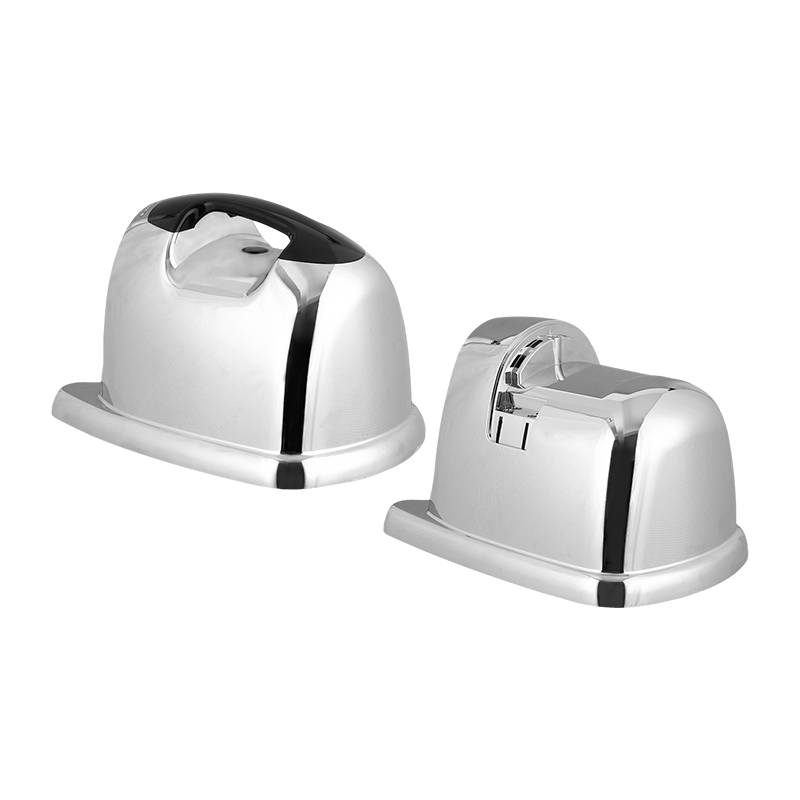
Galvanized components for home appliances are constructed from high-quality engineering plastics, specifically poly...
Content
A hospital procurement team recently ordered 3 ml cartridge pens for a diabetes education programme. The pens arrived, and the cartridges did not. They looked identical, but the cartridge neck profile did not match the pen's holder, so the cartridge could not be seated properly. The team learned the same lesson that every buyer eventually learns: a 3 ml cartridge pen is a system, not a single part.
That distinction matters because the pen body is a long-term purchase while the cartridge is a recurring consumable. Get the interface wrong and you are not buying a device, you are buying a compatibility problem. This article explains what makes a 3 ml cartridge pen work, which standards and tolerances matter, and what to verify before you add one to your supply catalogue.
A 3 ml cartridge pen is a reusable, needle-based injection device that accepts a prefilled 3 ml cartridge, usually a glass cylinder with a rubber plunger at one end and a metal cap with a septum at the other. For U-100 insulin, 3 ml equals 300 units, which is roughly a one-month supply for a patient who injects 10 units per day. The pen body does not contain the medicine; the cartridge does.
Most cartridge pens use a dial-a-dose mechanism. You turn a dial to select a dose, hear a click for each unit, press a button, and an internal piston pushes forward against the cartridge plunger. The same architecture is used for other injectable therapies, but insulin is the most standardised and best-documented example. That is why buyers usually start with insulin when they evaluate 3 ml cartridge pens.
The first buying decision is usually reusable versus disposable. The table below compares the two formats from a procurement perspective.
| Attribute | Reusable 3 ml cartridge pen | Disposable prefilled pen |
|---|---|---|
| Up-front cost | Higher (pen body) | Lower |
| Cost per dose | Lower after the first cartridge | Higher, included in each unit |
| Device waste | One pen body reused for years | Discarded after each use |
| Dose flexibility | Dial any dose within the range | Limited by fixed dose options |
| Compatibility risk | Pen and cartridge must be verified | Pen and cartridge arrive as one unit |
| Best suited for | Long-term insulin therapy | First-time users or single-product programmes |
For a patient injecting once or twice a day, a reusable pen is usually the lower-cost option after the first few cartridges. The bigger benefit is inventory simplicity: one pen model plus one cartridge line covers a wide range of doses. The trade-off is that someone must confirm the cartridge and the pen work together before patients are trained to use them.
The clinical value of a cartridge pen comes down to dosing accuracy. Under ISO 11608-1, the main standard for needle-based injection systems, delivered doses must stay within defined limits. In practice, the limits are commonly around 1 unit for small doses and around 5 percent for larger doses. A 30-unit dose should deliver roughly 28.5 to 31.5 units, while a 4-unit dose should deliver between 3 and 5 units.
These tolerances are not just a bench specification. A patient injecting twice a day with a persistent one-unit error accumulates about 730 extra units in a year, which is roughly two and a half 3 ml cartridges of insulin. Over the life of a reusable pen, that kind of drift changes a patient's glycaemic control and increases the cost of therapy.
When you request a quote, ask for batch-release accuracy data, not just a marketing sheet. A manufacturer that cannot state its tolerance under ISO 11608-1 has not finished the engineering conversation.
A 3 ml cartridge is a standardised format, but "standardised" does not mean interchangeable. Glass cartridges follow dimensional standards, such as ISO 13926-1 for insulin pen cartridges, for overall length, outer diameter, neck finish, and flange. A pen designed to those standards will physically accept most 3 ml cartridges. However, physical acceptance is not the same as compatibility. The piston stroke must align with the plunger position, the holder must apply even pressure, and the needle thread must engage the septum correctly.
Here are the checks to put into your procurement checklist:
If you are evaluating training needs, our step-by-step guide to using an insulin pen covers loading, priming, and injection technique.
The pen body is a precision injection-molded assembly. Tolerances on the cartridge holder, plunger rod, and dose dial are measured in fractions of a millimetre. A manufacturer that controls its own injection molding and assembly can manage those tolerances internally, which usually translates into more consistent dose delivery and fewer field failures. It also matters for price: when one factory makes the barrel, the dial mechanism, and the assembly tooling, there are fewer hand-offs between raw material and finished device.
In our medical device range, we manufacture a manual-visualization reusable insulin pen that works with standard 3 ml insulin cartridges. The design combines a manual dial with a visual window that shows the cartridge and plunger position, so patients can confirm both the dose and the remaining volume before each injection.
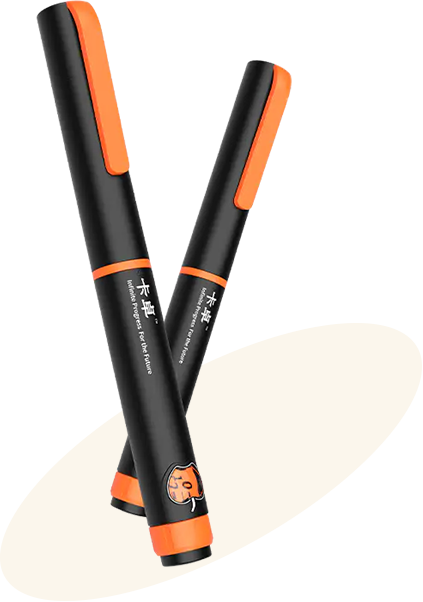 Manual Visualization Reusable Insulin Pen with 3 ml CartridgeThis reusable insulin pen features a manual dial and clear window for verifying dose and cartridge volume before injection. Its mechanical design avoids batteries, lowering per-use cost while supporting accurate, repeatable dosing.View Product →
The visual window is especially useful for older patients and for clinicians who need to verify that a patient has loaded the pen correctly. Because the device is reusable, the cost per injection falls after the first cartridge, and the manual mechanism avoids the battery and charging requirements of electronic injectors.
Reusable formats also support sustainability targets. Over an eight-year device life, one reusable pen replaces dozens of disposable pens and keeps their plastic, glass, and packaging out of the waste stream. You can read more about our ESG approach on our sustainability page.
A 3 ml cartridge pen is clinically proven, cost-efficient, and flexible, but only when the cartridge, the needle, and the pen body are treated as one validated system. Confirm the standards, ask for the accuracy data, check the compatibility list, and choose a supplier that can show you how the device is actually made. For a long-term diabetes programme, a reusable 3 ml cartridge pen backed by solid engineering is one of the best purchasing decisions you can make.

 Custom Pen Compound Syringe Manufacturers