Industry knowledge extension
Key Factors Influencing the Precision of a Manual Insulin Delivery Pen
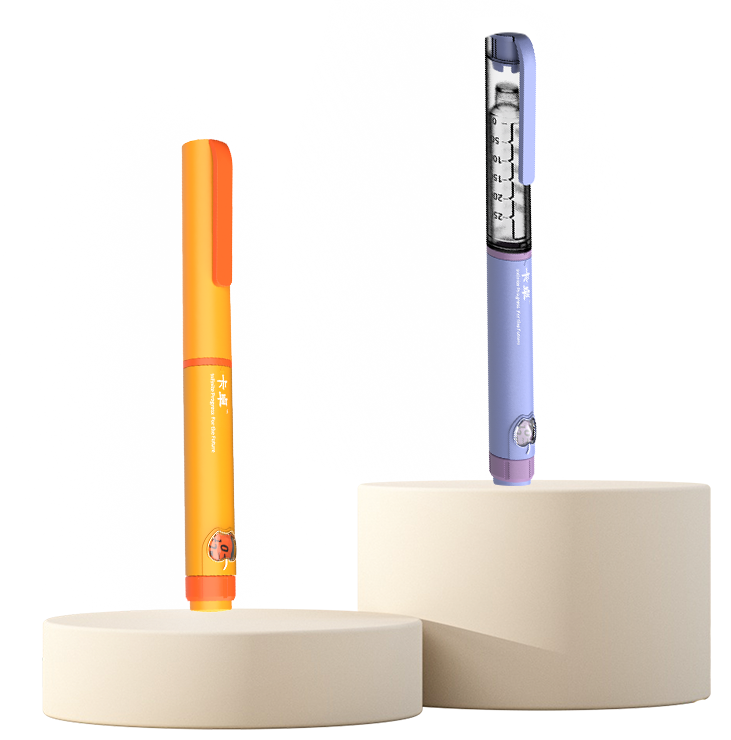
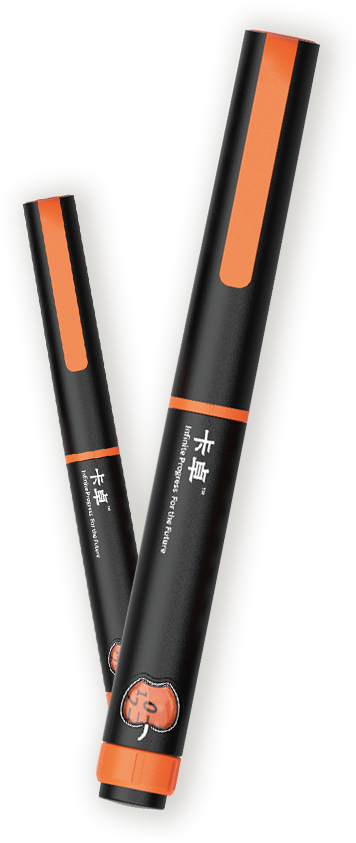
The accuracy of a manual insulin delivery pen determines the safety and consistency of daily glycemic management for millions of diabetes patients. Unlike automated or pump-based delivery systems, manual delivery pens depend entirely on mechanical interactions, fluid dynamics, user handling, and component manufacturing tolerances to dose insulin. Every unit of insulin delivered represents a tiny fluid volume, making these mechanical systems vulnerable to even minor physical variations. Companies operating in liquid conveyance technology, such as Yongjie (Zhejiang) Industrial Development Co., Ltd., focus on addressing these structural challenges through systematic engineering. By advancing research in portable liquid conveying devices—including both reusable platforms and single-use delivery architectures—manufacturers aim to eliminate mechanical tolerances and fluid path inefficiencies that compromise dosing accuracy, thereby strengthening independent technical capabilities in medical delivery hardware.
Mechanical Drive Mechanisms and Lead Screw Tolerances
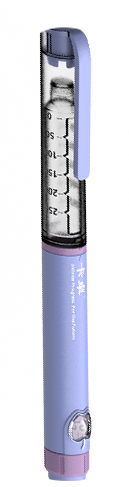
The core of a manual insulin delivery pen lies in its mechanical drive system, which translates rotational dial movements into linear plunger movement. When a patient dials a dose, an internal lead screw rotates along a matched drive nut, advancing the piston rod forward to displace fluid from the 3 mL glass cartridge. The precision of this linear displacement depends on the pitch uniformity and manufacturing tolerances of the lead screw. Any backlash or physical play between the screw threads and the drive nut can lead to dosage variation, causing either under-delivery or over-delivery. High-precision injection molding and strict quality control during mechanical assembly are required to minimize axial clearance. In structural designs where the drive rod is reset for cartridge replacement, such as in reusable pens, the return mechanism must maintain thread integrity over hundreds of operational cycles to prevent mechanical drift over time.
Fluid Properties and Hydraulic Resistance
Insulin formulations, whether rapid-acting clear solutions or intermediate cloudy suspensions, exhibit specific viscous behaviors that affect fluid discharge. As the user depresses the injection button, hydraulic resistance generates inside the thin gauge needle and cartridge neck. If the internal fluid path contains sudden cross-sectional transitions, flow separation and localized pressure drops can occur, affecting the volumetric discharge rate. In single-use and reusable liquid material conveying devices, optimizing the internal channel geometry ensures that fluid moves under steady laminar flow conditions. Proper alignment between the rubber stopper and the glass barrel wall also minimizes dynamic friction, preventing jerky plunger movements that could introduce volume variances during manual actuation.
Needle Gauge and Fluid Retention Characteristics
The needle attached to the manual insulin delivery pen serves as the final gateway for fluid administration. Modern insulin needles range from 29G to 32G in diameter, designed to minimize insertion discomfort. However, smaller needle diameters increase hydraulic resistance, requiring higher manual injection force from the user. If a patient releases the injection button too quickly, the residual pressure within the cartridge and needle assembly can cause fluid dripping after the needle is withdrawn from the subcutaneous tissue. This post-injection dripping reduces the actual volume delivered into the body. Re-using disposable needles further exacerbates accuracy issues, as bent tips or lubricant degradation increase entry friction and can cause fluid leaks around the needle hub.
Thermal Expansion and Environmental Conditions
Environmental factors, particularly ambient temperature fluctuations, exert a direct physical effect on both the mechanical hardware and the insulin liquid itself. Insulin expand or contracts with temperature shifts, which can alter the volume within a sealed 3 mL cartridge. Furthermore, thermal expansion of the plastic housing components can change internal mechanical clearances, subtly altering the stroke length of the lead screw. Exposure to direct heat or cold can also cause tiny air bubbles to dissolve out of the liquid solution. Air is compressible, whereas liquid is nearly incompressible. When air bubbles accumulate inside the cartridge chamber, a portion of the force exerted by the drive rod compresses the air bubble rather than pushing the liquid outward, causing a lower volume of insulin to be expelled.
Comparative Overview of Factors Influencing Delivery Accuracy
Understanding how individual hardware and environmental elements contribute to dose variance allows developers to refine internal pen architectures and operational guidelines.
| Accuracy Factor |
Primary Mechanism of Impact |
Engineering Mitigation Strategy |
Typical Clinical Effect |
| Lead Screw Backlash |
Mechanical axial play between screw threads and drive nut |
Tight-tolerance injection molding and anti-backlash gear design |
Volumetric variance per increment, especially at low dose settings |
| Air Bubble Accumulation |
Fluid compressibility due to trapped gas in the cartridge |
Routine priming procedures prior to dose setting |
Under-delivery of the prescribed dose due to gas compression |
| Plunger-Barrel Friction |
Inconsistent break-away friction between stopper and glass wall |
Controlled silicone oil application and precise barrel roundness |
Non-linear fluid expulsion rate during manual button depression |
| Post-Injection Dripping |
Residual hydraulic pressure inside small-gauge needles |
Optimized internal liquid channels and patient hold-time guidance |
Loss of fractionated dose units on skin surface post-withdrawal |
User Operational Variables and Handling Practices
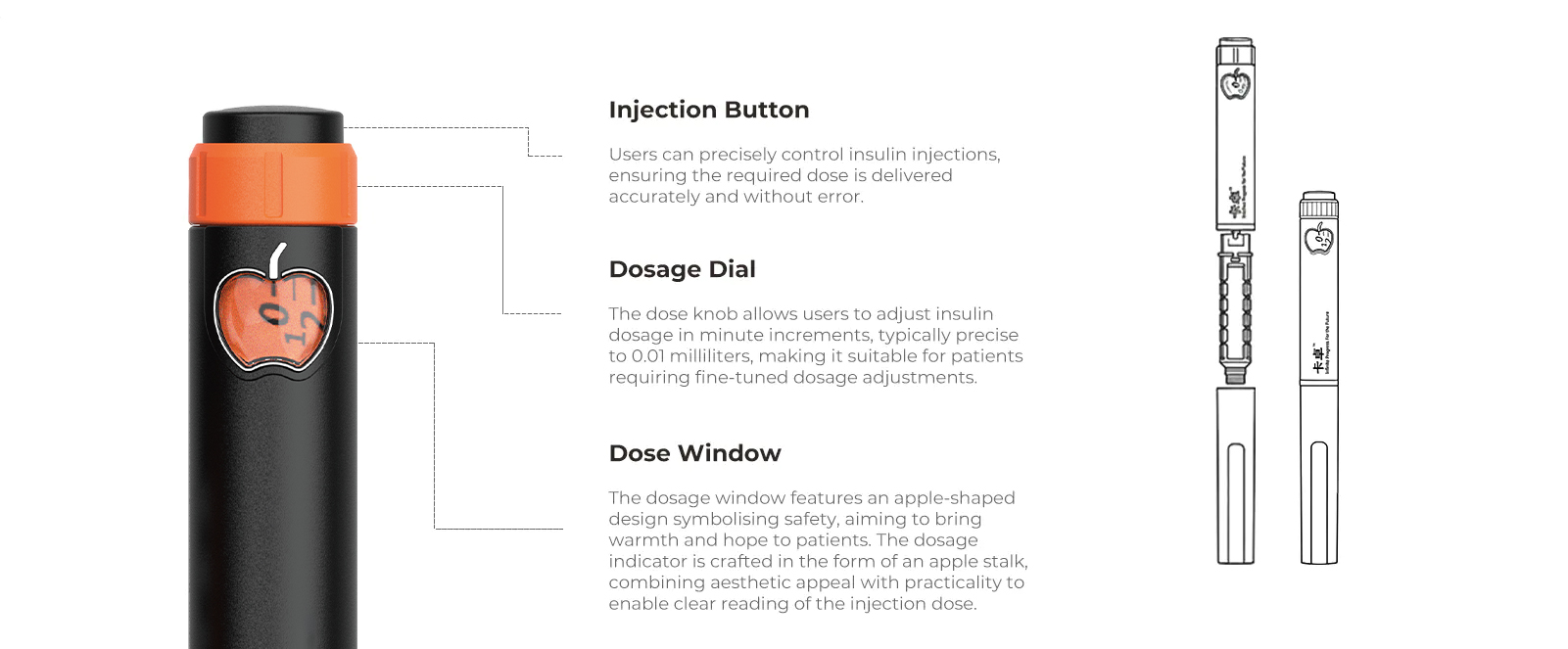
Human interaction remains a central factor in the performance of any manual insulin delivery pen. Unlike automated injection devices that dictate execution speed, manual pens rely on the user to depress the dose button fully and hold the device in place. If the button is not pushed to its absolute stop, the lead screw may not complete its full rotational cycle, leaving a small fraction of the dose inside the cartridge. Additionally, the hold time after button depression plays an important role; health protocols typically recommend keeping the needle inserted for six to ten seconds to allow internal pressure to equalize. Variations in how users visually align the dose counter with the indicator window can also cause minor setting inaccuracies, particularly for individuals with visual impairments or reduced fine motor skills.
Dose Scale Increments and Dialing Precision
The resolution of the dialing mechanism places a fundamental limit on how precisely a dose can be targeted. Manual pens are generally engineered in either 1-unit or 0.5-unit incremental step configurations. The internal ratchet mechanism uses a series of mechanical detents to lock the dial into position at each step. If the detent mechanism wears down due to material fatigue, the dial may rest between marked increments, leading to slight stroke length discrepancies. The mechanical integrity of the dose selection housing must withstand repeated rotation and reset actions over the lifespan of a reusable pen body to maintain consistent alignment between the external window markings and internal drive stops.
Distinction Between Pen Architectural Formats
The structural approach to pen architecture influences how accuracy factors compound over the lifetime of the delivery device.
| Factor / Property |
Reusable Manual Delivery Pen |
Disposable Prefilled Delivery Pen |
| Drive Rod Reset Wear |
Subject to repeated mechanical resets over years of service |
Single factory movement cycle; zero reset wear factor |
| Cartridge Alignment |
Depends on correct user loading and thread engagement |
Factory sealed and aligned during automated device assembly |
| Housing Rigidity Requirements |
Higher requirement to resist drop impact and long-term fatigue |
Standardized thermal plastics optimized for single-lifecycle use |
| Frictional Variations |
Requires consistent internal surface retention across multiple cartridges |
Single cartridge life ensures predictable glide force profiles |
Engineering Innovations in Liquid Material Conveyance
Addressing the full spectrum of accuracy variables requires ongoing technological advancements in liquid material conveying systems. Independent R&D initiatives focus on designing housing structures that maintain dimensional stability under varying humidity and temperature ranges. By holding structural patents for both reusable (ZL202210368411.0) and single-use (ZL202210368409.3) liquid conveying systems, domestic manufacturers like Yongjie (Zhejiang) Industrial Development Co., Ltd. contribute to closing the performance gap between international legacy devices and native production platforms. Optimizing internal force transmission, reducing component count, and refining automated assembly protocols ensure that manual insulin delivery pens provide consistent volumetric accuracy throughout their operational lifespan.
FAQ
Q: How do the patented liquid material conveying devices developed by Yongjie Industrial enhance the dosage precision of manual insulin delivery pens?
A: The patented technologies for both reusable (ZL202210368411.0) and single-use (ZL202210368409.3) liquid material conveying devices optimize the internal mechanical drive train and fluid delivery channels. By reducing mechanical clearance between the lead screw and drive nut, these structures minimize axial backlash, ensuring that manual rotational dialing translates directly into consistent volumetric fluid output with minimal margin of error.
Q: What structural features in manual insulin delivery pens prevent post-injection fluid leakage or dripping?
A: Post-injection dripping is caused by residual hydraulic pressure within the cartridge and fine-gauge needle. Modern manual pen designs address this by engineering rigid housing structures and smooth plunger interface geometry that eliminate dynamic mechanical flex. This ensures that fluid pressure neutralizes rapidly once the manual injection button is fully depressed, preventing liquid loss upon needle withdrawal.
Q: How do environmental temperature shifts affect the performance of a manual insulin delivery pen, and how is this mitigated?
A: Temperature variations can cause thermal expansion in plastic drive components and subtle volume shifts in liquid insulin. Advanced pen housing designs utilize high-stability, medical-grade polymers with low thermal expansion coefficients. This keeps mechanical tolerances stable across working temperatures, ensuring that the stroke length remains uniform regardless of minor ambient changes.
Q: What role does air bubble elimination play in maintaining the volumetric accuracy of a manual injection pen?
A: Air bubbles are compressible, whereas liquid insulin is virtually incompressible. When air is trapped inside the medication cartridge, part of the mechanical force applied by the manual drive rod compresses the air pocket instead of displacing fluid, leading to dose under-delivery. Routine priming procedures before injection purge these air pockets to restore the direct hydraulic drive link.
Q: How does independent patent ownership in liquid material conveying technology impact the domestic supply chain for insulin pens?
A: Securing proprietary patents for core liquid delivery mechanisms, such as those held by Yongjie (Zhejiang) Industrial Development Co., Ltd., bypasses international patent restrictions that historically limited local manufacturing. This independent intellectual property secures a stable, scalable supply chain for high-precision manual injection hardware, making self-injection systems more broadly accessible.
Q: How do mechanical feedback systems assist users in administering exact insulin quantities using manual pens?
A: Manual insulin delivery pens incorporate ratcheting dial systems that generate tactile and audible clicks for each unit step selected. This dual feedback system, paired with high-contrast dose windows, allows patients to verify their dialed dose visually and sensorially, reducing the likelihood of human error during daily administration.



 English
 عربى
عربى 中文简体
中文简体